Tuesday, December 31, 2013

My Reading Year

2013 has been a reasonably quiet reading year for me.

Seriously, 120 books is pretty average for me. But I did set myself the challenge of reading stuff I wouldn't normally read and ended up with quite a neat list in the end.

But what's my favourite read of 2013? What's the one title that struck such resonance with me that I reluctantly put it aside when I finished it? That's a tough one.
Discovering the Laini Taylor Daughter of Smoke and Bone series was a huge delight. The Elegance of the Hedgehog (Muriel Barbery) and The Book of Emmet (Deborah Forster) struck me deeply. John Scalzi's Redshirts and The Android's Dream saw me laughing out loud in public (as did The Mallet of Loving Correction). Mark Lawrence's series The Broken Empire is just plain wow, I waited with baited breath for each instalment and loved the blend of fantasy and science fiction. Darren Shan and Derek Landy were pretty constant throughout the year and anything Neil Gaiman writes is usually very very good (no disappointments there). The Fault in Our Stars by John Green is heartbreakingly beautiful as is Kate Forsyth's The Wild Girl. Tad Williams, Terry Pratchett, John Marsden,Brandon Sanderson, Stephen King, Joe Hill, Jim Butcher, Jack Heath, John Flanagan, Matthew Reilly, Dean Koontz, James A Owen, Cinda Williams Chima, Justine Larbalestier, Melina Marchetta, P M Newton, Libby Gleeson, Cassandra Clare, Emma Donoghue, to name but a few. There were very few stories I read which disappointed (always nice when this happens). I took on the recommendations of others more this year and discovered a range of new authors to explore. It's been a delight.

But, what's my favourite read of 2013? ....... Yeesh.

I'm going to give that honour to Laini Taylor and Daughter of Smoke and Bone. This title was suggested to me by a work experience student as excited by books and reading and authors and stories as I am and was a delight to spend a week with showing her the ins and outs of library land. I read this and was wowed.   Emperor of Thorns by Mark Lawrence comes a close second but I started this series last year so I was already exposed to the characters and story whereas Daughter of Smoke and Bone was completely new.    Neil Gaiman's Fortunately the Milk entertained me for days. Even now I can induce giggles with "Ve vill wiwisect you".    I was excited to be part of Jack Heath's Ink, inc. Pozible project and delighted by the end product.
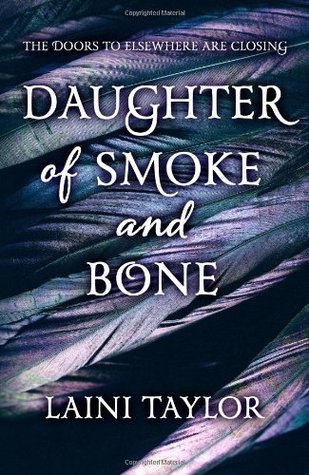
this book on GoodReads

It's been a really good reading year for me and I am keenly anticipating 2014 and the continuation of the Read Watch Play twitter reading group (follow @readwatchplay for the latest updates) which has inspired some cleverly themed reading choices. #rwpchat is a fun conversation to be involved in and the monthly tweetups have led to some very satisfying new discoveries. Talking books and games and movies and music and reading in all its myriad forms is positively delightful!

So, cheers to 2013 and bring on 2014 - may it be keenly filled with reading delights and discoveries!


Wednesday, October 16, 2013

Mother - daughter relationship

My daughter shared this with me on FB as a perfect description of our relationship - she is so right and I love her all the more for it. Especially when she plays the adult role :P    Enjoy!

.


Monday, October 14, 2013

GenreCon 2013


This past weekend I followed the happenings of GenreCon in Brisbane from afar, via twitter. I ended up following a whole heap of new people on twitter as a result but overall felt really connected to the event even though I wasn't there. 

I learned two things over the weekend (or rather I had two things I know reinforced for me) while I paid attention to the twitter stream and engaged in the happenings at GenreCon.

1. writers tweet a lot, and well. I guess it has to do with that whole aspect of sharing and learning that writers seem to have in spades (and shovels and front-end loaders.... heck, they've got a whole truck load of sharing going on). Librarians like to share too but it seems we're a little less prolific in our sharing than writers, maybe that's because writers are always writing so tweeting to excess (not really) is simply an extension of that. They sure know how to exercise their writing muscles.


2. conferences are simply wonderful to follow when there are so many people tweeting (and posting photos). I've known this one for simply years and it's been one of my major bugbears at Library conferences. 
You know the ones, organisers set up FB and Twitter accounts and then don't use them or only use one and not the other (usually FB), and then also don't promote the use of twitter with attendees and then the attendees (who I know tweet) don't tweet 'cause the wifi access is crap etc etc etc. I could go on, I won't. It annoys me, a lot. A couple of recent library conferences (ALIA Biennial 2012 and ALIA Information Online 2013 as examples) have turned this around, but the smaller state-wide library conferences still seem to have a hesitancy to tweet - I think they often forget that tweeting includes those not there and that in some small way they almost have an obligation to tweet because libraries are all about sharing and only so many library staff can afford to go to library conferences/seminars so how else can they be included if not for following the tweets? There are some wonderful library tweeps though who do share and I for one am extremely grateful to them and for them (virtual hugs to @ellenforsyth as a starter). 
Damn, I said I wouldn't go on about it and I did...... *apologies*

GenreCon was brilliant to follow. I really wish I was there and yet not being there I still felt included - because of the tweet stream. You guys rock.


I've noticed, over the years of following various authors, that writers are wonderful at sharing. There seems to be this inbuilt need to spread the writing love, to help build other writers up and collaborate in generating a community of writers that values and supports the various writing paths that each individual takes. This is true of Librarians too, at least the ones I try to surround myself with, we can do so much more, we have such a stronger, louder, richer voice when we support each other and collaborate with one another. And I for one am extremely grateful for that.


Friday, August 9, 2013

Sometimes collection development isn't easy....

Whilst I work with a team of others to select titles for our library, I do however, possess the final say in all selections and purchases. It's my job and we have limited funds. I am constantly saying "yes" to some titles and "no" to others all based on a whole myriad of considerations. This is what collection management and development entails.

So when a book was recently suggested to me for the library to buy which is basically about a married school teacher in a suburban US town who has a singular sexual obsession with 14 year old boys - "It is a craving she pursues with sociopathic meticulousness and forethought, her sole purpose in becoming a teacher is to fulfil her passion and provide her access to her compulsion” - I said 'no'.


I found myself quite distressed by the synopsis of the book. I tweeted about it. One of my friends commented that she'd once been offered a self-published non-fiction title on incest for her library to buy. Though the particular title she'd been offered was completely lacking in academic rigour or literary merit and so was rejected, she made a rather significant point - "as one of the last societal taboos, surely accurate and non-sensationalist discourse would be valuable?" I tend to agree with the sentiment. 


I considered what GoodReads readers had to say about the book in question. The ratings and the comments vary from 0 stars right up to 5 stars. Comments also range from praise of the writer's skill in presenting a distinctly horrible character to those who lambasted it as nothing more than sensationalist pornography..

This sort of blurring the lines is evil. If I could do it over again, I'd have stayed away, just to avoid the corrosive effect that desensitization has been proven to have on our psyches. At the very least, I implore you, don't let your kids read it, even your "mature" ones. (Recynd)

The range of comments went on to raise the issue of how a particular crime is viewed not only in society but also in different countries.


This made me curious as to what our very own Crimes Act 1900 No. 40 has to say - not just about the kind of behaviour being portrayed but also the fact of the physical presence of the book in bookshops...

Sections 66A - 77 cover the whole gamut of sexual offences relating to children.
Section 91FB describes child abuse material as any "material that depicts or describes, in a way that reasonable persons would regard as being, in all the circumstances, offensive ... a person who is, appears to be or is implied to be, a child engaged in or apparently engaged in a sexual pose or sexual activity (whether or not in the presence of other persons)."
This section goes on to state that "the matters to be taken into account in deciding whether reasonable persons would regard particular material as being, in all the circumstances, offensive, include:(a) the standards of morality, decency and propriety generally accepted by reasonable adults, and (b) the literary, artistic or educational merit (if any) of the material, and (c) the journalistic merit (if any) of the material, being the merit of the material as a record or report of a matter of public interest, and (d) the general character of the material (including whether it is of a medical, legal or scientific character)".
91H describes the penalty for production, dissemination and/or possession of said material to be a maximum of 10 years.

Does the book depict acts of child abuse as per the Crimes Act 1900? Yes. 
Am I a reasonable adult to be offended by it? Yes.
Does the book have any literary, artistic, or educational merit? No. Do any of the characters in the book participate in sexual offences against children? Yes. Do these characters actively pursue this activity? Yes. Do they know it is wrong? Yes. Does that stop them? No. Do they consider murder in order to hide their crime? Yes. Are they sexually interested in any kinds of sexual partners other than children of a certain age? No. (Note: I am basing my answers here on the majority of comments I read on GoodReads).

The book in question does not have graphic images but it does explicitly detail sexual activities between an adult and a child that leaves little to the imagination. The adult protagonist actively seeks out children of a certain age bracket and does not appear to be interested in these children as they mature. Based on what the Crimes Act 1900 tells me this is both behaviour and the presentation of behaviour that is a crime in Australia. Indeed there is a very good paper by Kylie Miller, Senior Analyst with the National Crime Authority, which considers the nature and definition of a paedophile. So, considering all these elements it could be fair to say that the library buying this book and making it available to the general public would constitute a breach of the Crimes Act. It's probably a good thing I said 'no' then isn't it.


It will be interesting to see how this book progresses through the Australian literary scene. We're a pretty forgiving lot, open to reading about all sorts of subjects, but I truly query whether this 'debut novel' is worth the paper it has been printed on.


On a final note, this is my own personal opinion. It is based solely on my interpretation of the reviews available on GoodReads and my interpretation of the Crimes Act 1900. I do not believe that having a list of 'banned books' is in any way shape or form a good idea. Nor do I believe that content which is extremely offensive to a reasonable person is a good way to get people's attention and change the social mindset that all paedophiles are male. If this were a Non-Fiction title which enabled "
accurate and non-sensationalist discourse" I would be all for it - but it's not.


Tuesday, August 6, 2013

Ramblings....

Back towards the end of July I came across an article written by Kerry Parnell listing the 25 books you really don't have to read before you die

The books listed include:

  • Eucalyptus / Murray Bail
  • Ulysses / James Joyce
  • Cloudstreet / Tim Winton
  • The Dice Man / Luke Rhineheart
  • Catch 22 / Joseph Heller
  • To The Lighthouse / Virginia Woolf
  • The Slap / Christos Tsiolkas
  • Twilight / Stephanie Meyer
  • On The Road / Jack Kerouac
  • The Metamorphosis / Franz Kafka
  • Midnight's Children / Salman Rushdie
  • Oscar & Lucinda / Peter Carey
  • My Sister's Keeper / Jodi Picoult
  • Sons and Lovers / D H Lawrence
  • We Need To Talk About Kevin / Lionel Shriver
  • 50 Shades of Grey / E L James
  • Crime and Punishment / Fyodor Dostoyevsky
  • Eat, Pray, Love / Elizabeth Gilbert
  • Shantaram / Gregory David Roberts
  • Tess of the D'Urbervilles / Thomas Hardy
  • Charlie and The Great Glass Elevator / Roald Dahl
  • Memoirs of a Geisha / Arthur Golden
  • The Devil Wears Prada / Lauren Weisberger
  • The Secret / Rhonda Byrne
  • The Celestine Prophecy / James Redfield


There's a comment from Grant of Melbourne right at the end that neatly sums up a lot about how I feel about this article....

I [am] so glad that we have someone like this reviewing books who is clearly more intelligent than the multitudes who have enjoyed these books or the people who as a group have reviewed the books and deemed them worthy [of] recognition. Sorry Kerry but many of us have progressed beyond the Cat in the Hat and Green Eggs and Ham, have laid down the crayons from our colouring books and can follow stories that have multiple threads, moral dilemma, convolutions or the other issues that seem to plague you with these books. The reason that people enjoy them or that they are deemed classics is that they reflect in many regards our lives. You inability to connect to this either indicates a bland life or some other disconnection with the world around you... rather sad either way,

Moving on.

There are various ways of looking at this list - one is to take the list at face value and consider the merits (or not) of each title, another is to consider the act of list making itself (after all who am I or anyone else to tell others what to read and what not to? I honestly dislike lists that state "100 books to read before you die", or "100 places to visit before you die", and so on - seriously, a slow reading year for me is roughly 100 books, does this mean my death is imminent?). 

I guess the chief part of this article that I truly take umbrage to, before I even get to the books listed are the words .... "I'd like to relieve you of some literary pressure and reveal the titles life's just far too short to waste time on". Since when is life too short to read whatever takes your fancy? Since when is life too short to read what has won an award? Since when is life too short to read outside your comfort zone and push the boundaries of what reading (and indeed writing) is?

I personally have no intention of reading beyond Twilight or 50 Shades of Grey - I've read both those titles and have no inclination to read the remainder of either series. Whilst I consider both books to have some literary flaws I also see great merit in both. I will continue to hold up 50 Shades as an example of writing that has got locale descriptions down perfectly - R L James certainly knows how to describe a room, what people look like, what they are wearing. The rest of the book didn't do a lot for me personally but I do recognise and accept the appeal to others. Aside from what I think, both books got people reading and the bottom line is that it's all about "bums on seats".

I have read Ulysses by James Joyce. It's not an easy read but I do believe it's worth it. Reading Ulysses forced me to reconsider the experience of reading and to be challenged to accept that a story can be told in oh so many ways - all within the one novel. I am also a serious fan of train-of-thought (as anyone who knows me well will attest) so the ending pages were an absolute delight where lack of punctuation fought hard against the flow of words - I loved it!

I personally cannot stand Thomas Hardy, but I put a lot of that down to a bad experience reading Tess of the D'Urbervilles during high school. Being forced to read a book and choosing to read one can really influence how you go on to feel about that book and this one is certainly a case in point. Here I was frustrated by the number of pages Hardy spent describing the heath yet leaving me simply with a feeling that it was low and a green-purplish colour.... But, I am an impatient reader - I want to know now what is happening and certainly as a 17 year old I had no patience at all for the casual meanderings that established the scenery. Now I see the cleverness, now I see the beauty in the prose, now I see the clever use of language, now I see that the pages were worth it .... I'm still an impatient reader but I'm a lot more forgiving these days.

I could discuss each and every title on this list but it will only and always be my own opinion, to which you are very welcome to disagree. There is no definitive list, there will never be any agreement. Disparity is as natural as agreement. I adore Shakespeare. I like dark vibrant colours. I prefer Fantasy fiction over World fiction. I am me. You are you. And to be blunt, thank goodness for that for if we were all the same it would be a jolly boring world we live in!

I remain however, vehemently opposed to anyone who tells me that I shouldn't waste my time on a particular book. After all, it's my time to do with as I please. Reading is a personal experience and one which should be respected. I don't think there can ever be a list which definitively gathers those books which are worthy of reading and those which are not. You need only look at any title listed on GoodReads to see the sheer variance in rating and opinion for each and every title there. And I for one think that the difference of opinion is what adds to the discussion and to the value of each reading experience.


Oh and by the way, I've only not read 6 out of the 25 books listed ... 


Monday, July 1, 2013

non-readers and RA.....

Earlier today I came across this post from Flavorwire titled The first 10 works of fiction you should read if you've never read a book before  via Good Reading magazine. It follows a comment from Jamie Oliver about how he doesn't read much fiction (mostly because he's dyslexic but also because he's busy); he makes the comment that he gets bored easily, but had also just finished Suzanne Collins' Catching Fire

The Flavorwire list includes:
The adventures of Huckleberry Finn / Mark Twain
Hamlet / Shakespeare
The catcher in the rye / J D Salinger
Heart of darkness / Joseph Conrad
The great Gatsby / F Scott Fitzgerald
Ender's Game / Orson Scott Card
The hobbit / J R R Tolkein
To kill a mockingbird / Harper Lee
Beloved / Toni Morrison
Mrs Dalloway / Virginia Woolf

Whilst these are all wonderful stories and well worth reading I wonder if they are truly a good selection of titles to suggest to non-readers. As Jamie Oliver states, he gets bored easily. I don't see any of these titles engaging the adult non-reader and inspiring them to read the next book and the next and so on.... Why not? Well for starters they're a little heavy on language. I mean, would you really introduce someone who admits to not being that keen to sit down and spend some considerable time doing nothing else but reading to Shakespeare as a good place to start, to turn that non-reader into a reader? I wouldn't, and I love Shakespeare.

The key element to suggesting titles for a non-reader (indeed any reader) is to consider what they want out of the experience, to suit the title/author to the person's likes and interests. Take a hint from Jamie Oliver and think current authors who are in the news and/or whose books are in the movies and you're sure to provide some great introductory texts to adult non-readers. Many movies are based on an original book and sometimes if someone has really enjoyed the movie they'll consider reading the book. So taking this as a starting point I'd think about suggesting the following titles (in no particular order) as places adult non-readers might like to start on their journey towards becoming readers.


http://matthewreilly.com/the-novels/
The Hunger Games / Suzanne Collins
Master & Commander / Patrick O'Brian
My week with Marilyn / Colin Clark
Silver Linings Playbook / Matthew Quick
Contest / Matthew Reilly
Jurassic Park / Michael Crichton
Marvel comics (Iron Man, Avengers)
DC comics (Superman, Justice League)
Under the dome / Stephen King
Wicked / Gregory Maguire

I wouldn't say this is my top 10 (I don't think there is one), rather a place to start the conversation towards finding out what your non-reader's tastes and interests are before you suggest a place for them to begin their adult reading journey.


Thursday, June 13, 2013

thoughts on self-publishing

image taken from this Salon article
This rather interesting article by Hugh Howey swept past my brain late last night so this morning I trolled back through my FB feed to where I first spotted it and read it thoroughly. It really is worth a read.

It's an interesting point of view on self-publishing and I find its implications for library collection development to be quite intriguing.

Hugh Howey writes books, he self-publishes those books, he maintains complete 100% ownership of his books, they are available digitally and as such this means they will always be available (no out-of-print options here), he also now makes a substantial monthly income from this.

One of the chief challenges I face in my role developing my library's collection is how I treat self-published material. I have to admit that the majority of self-published print material that comes across my desk is appalling in content, style, presentation, and quality. There's one particular picture book featuring a crocodile (or was it an alligator?) that still gives me shudders (*shudders just thinking about it*). These authors are often local people who are so very proud of their work that it is challenging to try to explain that what they are giving me is of extremely poor quality. There has been little or no editorial process and so the concepts of writing to your audience or suiting book content to your audience hasn't been that well balanced. Many of these titles end up in our Local Studies collection simply to satisfy the author and to collect material written by local people.

That said, Christopher Paolini's "Eragon" originally started life as a 'self-published' title printed by his family's printing company. And I have had a couple of beautifully illustrated and written picture books come across my desk which have been gorgeous. But it's not been the norm.

The rise of eBooks has meant that self-publishing has taken on a whole new form. Authors can publish prolifically in eBook format and reach a growing audience of people who do and do not use libraries. Hugh Howey points out that the popularity (or not) of his work is always determined by the readers so making your work broadly accessible raises the chances of success (from an author making money point of view). This is typically the case when you consider the popularity of Fifty Shades of Grey (by E. L. James) which started life as a Twilight fan-fiction piece. It only existed as an eBook, you could only get it online, but the popularity there gave it the strength to be physically published as a print book where its increased popularity (and that particular genre) then grew exponentially. (It's a crazy world)

So how do I develop my library's collection when more and more asked-for titles and authors are only available as an eBook? How do I make them accessible to my library customers? How do I catalogue that item? How do I acquisition it? How do I lend it?

We have a series of lending eReaders with preloaded genre titles on them. One of the eReaders features a couple of titles by Lee Child which are only available as eBooks, you can't get them in print. Here's a hugely popular commercially published author whose books walk off the shelves in droves and yet he too has followed the eBook path for some of his work. 

This is not to say that all eBooks have been self-published. Most publishers have jumped on the bandwagon to also sell eBook versions of printed titles, but they generally do so at a hugely marked-up price which compares directly to the cost of the printed item. Self-published authors will undoubtedly sell their eBook titles for $0.99 or so, certainly under the $10.00 mark. This pricing makes more of the books accessible and turns eBooks into impulse buys which more and more people then buy more of - it becomes a lovely cycle of income production for the author. I like this idea.

Self-publishing is a bit like a Kickstarter project but where the thing is available before the money comes in. Self-publishing allows writers to hone their skills and grow and develop in an arena which provides constant feedback and criticism (hopefully mostly constructive). Self-publishing also allows writers to afford to keep writing. It is changing the nature of publishing itself and challenging traditional publishing houses to adapt.

It kind of reminds me of the teen flick "Stick It" featuring a group of rebellious gymnasts who defy the traditional rules to do the routines they want to do, to show the full extent of their skills and abilities, and to choose the winners themselves regardless of what the judging 'rules' determine. Self-publishing allows authors to retain full ownership of their work, to defy the traditional rules of publishing, to defy the standard expectations of success, and to allow their readers to choose the best-sellers based on what they like to read, not what has had the most money spent on a media campaign and groovy cover.

Food for thought.


Wednesday, June 5, 2013

long long ago, in a land far far away

I love the very idea of this month's #rwpchat twitter reading group theme - #faraway. The idea of exploring places not here, worlds that don't exist, and times long past is exciting and intriguing, and just downright fun!  I feel like a small child in a fancy toy store - it's all so bright and sparkly and I want to look at and touch everything at once!

So what are some of my favourite #faraway reads? Where are some of my favourite #faraway places?

Anything Fantasy, anything Science Fiction immediately springs to mind. But so do Westerns and Historical fiction. Anything set overseas 'cause hey, it's not here and here being Australia means that overseas is faraway. Even something that explores a concept I am unfamiliar with is a #faraway read. And of course cooking books which explore cultures from around the world falls naturally into this group as well. 

I love this theme - the choice is limitless!

Lord of the Rings / J R R Tolkein
The Chronicles of Thomas Covenant, Unbeliever / Stephen R Donaldson
Memory, Sorrow, and Thorn / Tad Williams
The Dirty Streets of Heaven / Tad Williams
Zoe's Tale / John Scalzi
The God Machines / John Scalzi
The Hitchhiker's Guide to the Galaxy / Douglas Adams
Discworld series / Terry Pratchett
The Long Earth / Terry Pratchett and Stephen Baxter
Shakespeare
Chaucer
John Donne
American Gods / Neil Gaiman
any / all of the NASA twitter feeds
any / all of the ABCStarStuff twitter feeds
Wuthering Heights / Emily Bronte
Jane Eyre / Charlotte Bronte
Emma / Jane Austen
Pride and Prejudice / Jane Austen
Shades of Grey / Jasper Fforde
The Eyre Affair (Tuesday Next series) / Jasper Fforde
The Lightbringer series / Brent Weeks
Wanderer of the Wasteland / Zane Grey
A Song of Ice and Fire / George R R Martin
Harry Potter series / J K Rowling
Where the Wild Things Are / Maurice Sendak
The Bunyip of Berkeley's Creek / Jenny Wagner
Australian Women's Weekly cookbooks

Global Village / SBS
Food Safari / SBS
Star Trek
Red Dwarf

Star wars
Shrek
Willow
The Princess Bride
The 13th Warrior
The Searchers
Harry Potter

Bioshock
Game of Thrones
Assassin's Creed


... just to name a few


Thursday, May 30, 2013