Monday, February 3, 2014

The Betrayal by Y. A. Erskine


I read this novel as part of the #aww2014 challenge to read at least 10 books by Australian women writers this year. The following is the review I put up on Goodreads with a rating of 2/5 stars (It was ok).

This is a solid police procedural but lacks the grit of an Ian Rankin, P M Newton, or Patricia Cornwell. While it pries open the lid of police and political corruption it fails to provide a likeable character and gives the sense that this story is part of a larger whole - a much larger whole. In itself it seems somewhat incomplete.
The Betrayal is the second novel by Y. A. Erskine, following on from The Brotherhood - which I have not read. The sheer naivete of the main character seems somewhat implausible given her chosen career. The sexual  deprivations of most of the characters also seems a little over the top. The arrogance and chauvinism and heightened levels of anger expressed by one character is excessive, yet oddly plausible.
The feelings and thoughts expressed by the spouse of a police office with Post Traumatic Stress Disorder are spot on and for me provide the only sense of resonance with this novel.
Y. A. Erskine is a talented writer whose skill continues to develop with her characters. While this genre is not one I read often, I would certainly read her work again.

I didn't really take to this book and the more I thought about it the more I realised it was mostly due to the overall feeling that the story was incomplete. The Betrayal unfolds around the crime of date-rape but features so many other characters and events/crimes that the starting point gets a little lost. Rather than tying pieces together it opens up more and more story lines until the reader (ie, me) is left feeling that the date-rape crime is being swept aside for the larger story. The ending is unsatisfactory.
All that aside, there's some definite talent here and I would like to see how Erskine pulls these characters together to solve the larger issues/crimes.


Monday, January 27, 2014

The Ambassador's Mission by Trudi Canavan : a review


The Ambassador's Mission is book one of the Traitor Spy trilogy and follows on from Trudi Canavan's previous seven novels (two trilogies and a standalone). For a reader coming in without any of the previous back-story there is little sense of missing any required history or appreciation of the characters. Canavan cleverly reintroduces the important players and provides whatever context is required for the story to progress. I'm still amazed that I've gone all this time and not read any of Canavan's stories before.

There are three key characters whose tales intersect at various levels and who the story follows throughout. Sonea is a Black Magaician and tied to the guidance and control of the Kyralian Guild of Magicians. She is a Healer and has emerged from within the ranks of the very poor to be a powerful magician (and somewhat feared by her colleagues). Her son, Lorkin is also a magician but an Alchemist. He agrees to accompany Lord Dannyl, the newly appointed Guild Ambassador, to Sachaka as his aid - both to help Dannyl in his search to fill some of the gaps in Kyralian history and also to explore more of the world than the city of his birth. Cery is an old friend of Sonea and a Thief in the City, he's familiar with the darker side of life.

"The Ambassador's Mission" ends on the delightfully teasing note of intrigue and deception, and as any good story does leaves you wanting more. Sonea has helped catch the rogue magician and Thief Killer; Cery has avenged his family's deaths and grown closer to his only surviving child (and learned a nice tidbit of information about a certain other Black Magician.... no spoilers); and Lorkin has come closer to discovering more about the Sachakans, the people they call Traitors, his father Akkarin, and hidden magic.

I thoroughly enjoyed this story and am keen to continue reading the trilogy to discover what happens with our three main characters. It has everything: political intrigue, clash of cultures, fighting, magic, avoiding capture, more magic, quips. But more importantly it is enjoyable and I really do want to know how this story ends. I've ended up caring about these characters, curious about the Sachakans and Traitors and blood gems and magic, wondering how the Wasteland fits into all of this, and whether the Guild will let go of old prejudices and fears.


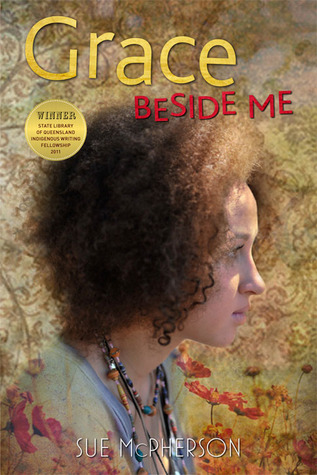
Grace Beside Me by Sue McPherson: a review


Grace Beside Me by Sue McPherson takes place in 2008 and follows young teenager Fuzzy Mac (Ocean Skye McCardell) and her life in the country town of Laurel Dale. Raised by her grandparents she explores her relationships with them, with her mostly absent father, with her dead mother, with her friends, neighbours, and  community. Fuzzy's grandparents are a mix of Islander and Koorie and the absolute cornerstone of Fuzzy's life. They instill a pride in family and heritage in Fuzzy which shines through her interactions with everyone she meets. 2008 is a big year for this family: it's the year the nation says "sorry" for removing Aboriginal children from their parents. It's the year Fuzzy is faced with some tough decisions and learn to find grace beside her -the grace which comforts and settles torn emotions, the grace which provides wisdom, the grace to be at peace with you are  and within your own skin whatever that may be.
Grace Beside Me is a well written young adult story. The story labours a little to start with, laying deep and somewhat complex foundations, but goes on to find its own rhythm and flow. It is a novel which is very much about the value of stories in identifying who we are and where we come from. The book does tend to cover a lot of ground and attempt to expose Fuzzy to as much of the darker side of Australia's past which Aboriginal people have been subjected to as McPherson can fit within the pages. At times the story itself seems to lose its focus as a result.
That said, this is a powerful story and one which explores what it means to be Aboriginal in Australia and the impact Australia's past has even now. It does not sugar coat anything but provides a simple and straightforward insight into a young girl's family and life. I thoroughly enjoyed this book and was heartened by the choices Fuzzy makes and the wisdom her grandparents use to guide her.

This is the second book I have read as part of the Australian Women Writers Challenge for 2014. It is Sue McPherson's debut novel and written with the support of the State Library of Queensland's 2011 kuril dhagun Indigenous Writing Fellowship which is part of the State Library's black&write! Indigenous Writing and Editing Project.


Monday, January 6, 2014

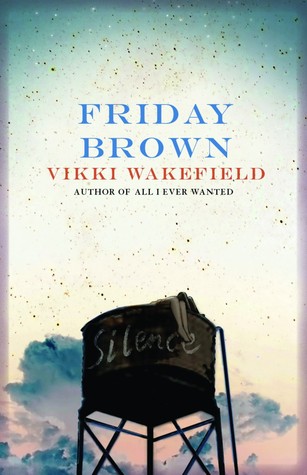
Friday Brown by Vicki Wakefield

on GoodReads


Friday Brown is a beautiful story of self-discovery and self-determination. It is the coming-of-age tale of a young girl, discovering who she is, but on her own terms. At 17 Friday's life has been under the singular influence of her mother until she finds herself alone and lost in Sydney. As she falls into the company of a group of homeless children she learns the value of friendship, the meaning of love, and finally the meaning behind her mother's philosophy of life: that if you can't make a good choice, at least make a choice you can live with.

I enjoyed this story immensely (4/5 stars). Wakefield describes Sydney and the various country towns Friday finds herself in with clarity and detail. Her characters are honest and flawed, the dialogue cleverly reinforcing their various natures. Friday is an engaging character and her struggle to remain true to herself whilst also discovering who she is, the sort of person she chooses to be, is universal.

When all is said and done, Friday Brown is a story about how the choices you make are what end up defining you as a person, and accepting people for who they are, regardless, is the sign of true friendship.

I look forward to more by Vikki Wakefield. Her first novel, All I Ever Wanted, was shortlisted for the 2011 Gold Inky Awards, shortlisted for the 2012 REAL Awards, a 2012 CBCA Notable Book and winner of the Young Adult Fiction Award at the 2012 Adelaide Festival Awards for Literature. Friday Brown is her second novel and was shortlisted for the 2013 CBCA Book of the Year for Older Readers.


Thursday, January 2, 2014

2014 Australian Women Writers Challenge


A new year brings a new reading challenge.
As well as #rwpchat and the ubiquitous GoodReads challenge, this year I've decided to participate in the Australian Women Writers Challenge.

For me the challenge will be in developing my review writing skills. I've done a little bit of reviewing for ALIA's inCite magazine a few years ago but mostly keep my personal reviews to GoodReads or this blog. (Let's be honest, mostly I just rate a book on GoodReads and leave it at that, call me lazy). Which is why I'm excited about #aww2014. It's a challenge that not only stretches me as a reader and reviewer but more importantly highlights the work of Australian women writers.
And if there's one thing which I am passionate about as a reader, it is supporting Australian writers.

So I've joined the AWW challenge group on GoodReads and I'll be signing up and focusing my reading efforts (and reviewing efforts) on the work of Australian women. I am still debating what level to aim for (Stella = 4; Miles = 6; Franklin = 10) but am really looking forward to sharing my reviews and reading the reviews of other readers participating in #aww2014.

This is going to be fun!


Tuesday, December 31, 2013

My Reading Year

2013 has been a reasonably quiet reading year for me.

Seriously, 120 books is pretty average for me. But I did set myself the challenge of reading stuff I wouldn't normally read and ended up with quite a neat list in the end.

But what's my favourite read of 2013? What's the one title that struck such resonance with me that I reluctantly put it aside when I finished it? That's a tough one.
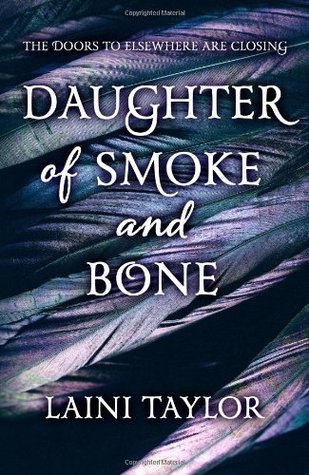
Discovering the Laini Taylor Daughter of Smoke and Bone series was a huge delight. The Elegance of the Hedgehog (Muriel Barbery) and The Book of Emmet (Deborah Forster) struck me deeply. John Scalzi's Redshirts and The Android's Dream saw me laughing out loud in public (as did The Mallet of Loving Correction). Mark Lawrence's series The Broken Empire is just plain wow, I waited with baited breath for each instalment and loved the blend of fantasy and science fiction. Darren Shan and Derek Landy were pretty constant throughout the year and anything Neil Gaiman writes is usually very very good (no disappointments there). The Fault in Our Stars by John Green is heartbreakingly beautiful as is Kate Forsyth's The Wild Girl. Tad Williams, Terry Pratchett, John Marsden,Brandon Sanderson, Stephen King, Joe Hill, Jim Butcher, Jack Heath, John Flanagan, Matthew Reilly, Dean Koontz, James A Owen, Cinda Williams Chima, Justine Larbalestier, Melina Marchetta, P M Newton, Libby Gleeson, Cassandra Clare, Emma Donoghue, to name but a few. There were very few stories I read which disappointed (always nice when this happens). I took on the recommendations of others more this year and discovered a range of new authors to explore. It's been a delight.

But, what's my favourite read of 2013? ....... Yeesh.

I'm going to give that honour to Laini Taylor and Daughter of Smoke and Bone. This title was suggested to me by a work experience student as excited by books and reading and authors and stories as I am and was a delight to spend a week with showing her the ins and outs of library land. I read this and was wowed.   Emperor of Thorns by Mark Lawrence comes a close second but I started this series last year so I was already exposed to the characters and story whereas Daughter of Smoke and Bone was completely new.    Neil Gaiman's Fortunately the Milk entertained me for days. Even now I can induce giggles with "Ve vill wiwisect you".    I was excited to be part of Jack Heath's Ink, inc. Pozible project and delighted by the end product.

this book on GoodReads

It's been a really good reading year for me and I am keenly anticipating 2014 and the continuation of the Read Watch Play twitter reading group (follow @readwatchplay for the latest updates) which has inspired some cleverly themed reading choices. #rwpchat is a fun conversation to be involved in and the monthly tweetups have led to some very satisfying new discoveries. Talking books and games and movies and music and reading in all its myriad forms is positively delightful!

So, cheers to 2013 and bring on 2014 - may it be keenly filled with reading delights and discoveries!


Wednesday, October 16, 2013

Mother - daughter relationship

My daughter shared this with me on FB as a perfect description of our relationship - she is so right and I love her all the more for it. Especially when she plays the adult role :P    Enjoy!

.


Monday, October 14, 2013

GenreCon 2013


This past weekend I followed the happenings of GenreCon in Brisbane from afar, via twitter. I ended up following a whole heap of new people on twitter as a result but overall felt really connected to the event even though I wasn't there. 

I learned two things over the weekend (or rather I had two things I know reinforced for me) while I paid attention to the twitter stream and engaged in the happenings at GenreCon.

1. writers tweet a lot, and well. I guess it has to do with that whole aspect of sharing and learning that writers seem to have in spades (and shovels and front-end loaders.... heck, they've got a whole truck load of sharing going on). Librarians like to share too but it seems we're a little less prolific in our sharing than writers, maybe that's because writers are always writing so tweeting to excess (not really) is simply an extension of that. They sure know how to exercise their writing muscles.


2. conferences are simply wonderful to follow when there are so many people tweeting (and posting photos). I've known this one for simply years and it's been one of my major bugbears at Library conferences. 
You know the ones, organisers set up FB and Twitter accounts and then don't use them or only use one and not the other (usually FB), and then also don't promote the use of twitter with attendees and then the attendees (who I know tweet) don't tweet 'cause the wifi access is crap etc etc etc. I could go on, I won't. It annoys me, a lot. A couple of recent library conferences (ALIA Biennial 2012 and ALIA Information Online 2013 as examples) have turned this around, but the smaller state-wide library conferences still seem to have a hesitancy to tweet - I think they often forget that tweeting includes those not there and that in some small way they almost have an obligation to tweet because libraries are all about sharing and only so many library staff can afford to go to library conferences/seminars so how else can they be included if not for following the tweets? There are some wonderful library tweeps though who do share and I for one am extremely grateful to them and for them (virtual hugs to @ellenforsyth as a starter). 
Damn, I said I wouldn't go on about it and I did...... *apologies*

GenreCon was brilliant to follow. I really wish I was there and yet not being there I still felt included - because of the tweet stream. You guys rock.


I've noticed, over the years of following various authors, that writers are wonderful at sharing. There seems to be this inbuilt need to spread the writing love, to help build other writers up and collaborate in generating a community of writers that values and supports the various writing paths that each individual takes. This is true of Librarians too, at least the ones I try to surround myself with, we can do so much more, we have such a stronger, louder, richer voice when we support each other and collaborate with one another. And I for one am extremely grateful for that.


Friday, August 9, 2013

Sometimes collection development isn't easy....

Whilst I work with a team of others to select titles for our library, I do however, possess the final say in all selections and purchases. It's my job and we have limited funds. I am constantly saying "yes" to some titles and "no" to others all based on a whole myriad of considerations. This is what collection management and development entails.

So when a book was recently suggested to me for the library to buy which is basically about a married school teacher in a suburban US town who has a singular sexual obsession with 14 year old boys - "It is a craving she pursues with sociopathic meticulousness and forethought, her sole purpose in becoming a teacher is to fulfil her passion and provide her access to her compulsion” - I said 'no'.


I found myself quite distressed by the synopsis of the book. I tweeted about it. One of my friends commented that she'd once been offered a self-published non-fiction title on incest for her library to buy. Though the particular title she'd been offered was completely lacking in academic rigour or literary merit and so was rejected, she made a rather significant point - "as one of the last societal taboos, surely accurate and non-sensationalist discourse would be valuable?" I tend to agree with the sentiment. 


I considered what GoodReads readers had to say about the book in question. The ratings and the comments vary from 0 stars right up to 5 stars. Comments also range from praise of the writer's skill in presenting a distinctly horrible character to those who lambasted it as nothing more than sensationalist pornography..

This sort of blurring the lines is evil. If I could do it over again, I'd have stayed away, just to avoid the corrosive effect that desensitization has been proven to have on our psyches. At the very least, I implore you, don't let your kids read it, even your "mature" ones. (Recynd)

The range of comments went on to raise the issue of how a particular crime is viewed not only in society but also in different countries.


This made me curious as to what our very own Crimes Act 1900 No. 40 has to say - not just about the kind of behaviour being portrayed but also the fact of the physical presence of the book in bookshops...

Sections 66A - 77 cover the whole gamut of sexual offences relating to children.
Section 91FB describes child abuse material as any "material that depicts or describes, in a way that reasonable persons would regard as being, in all the circumstances, offensive ... a person who is, appears to be or is implied to be, a child engaged in or apparently engaged in a sexual pose or sexual activity (whether or not in the presence of other persons)."
This section goes on to state that "the matters to be taken into account in deciding whether reasonable persons would regard particular material as being, in all the circumstances, offensive, include:(a) the standards of morality, decency and propriety generally accepted by reasonable adults, and (b) the literary, artistic or educational merit (if any) of the material, and (c) the journalistic merit (if any) of the material, being the merit of the material as a record or report of a matter of public interest, and (d) the general character of the material (including whether it is of a medical, legal or scientific character)".
91H describes the penalty for production, dissemination and/or possession of said material to be a maximum of 10 years.

Does the book depict acts of child abuse as per the Crimes Act 1900? Yes. 
Am I a reasonable adult to be offended by it? Yes.
Does the book have any literary, artistic, or educational merit? No. Do any of the characters in the book participate in sexual offences against children? Yes. Do these characters actively pursue this activity? Yes. Do they know it is wrong? Yes. Does that stop them? No. Do they consider murder in order to hide their crime? Yes. Are they sexually interested in any kinds of sexual partners other than children of a certain age? No. (Note: I am basing my answers here on the majority of comments I read on GoodReads).

The book in question does not have graphic images but it does explicitly detail sexual activities between an adult and a child that leaves little to the imagination. The adult protagonist actively seeks out children of a certain age bracket and does not appear to be interested in these children as they mature. Based on what the Crimes Act 1900 tells me this is both behaviour and the presentation of behaviour that is a crime in Australia. Indeed there is a very good paper by Kylie Miller, Senior Analyst with the National Crime Authority, which considers the nature and definition of a paedophile. So, considering all these elements it could be fair to say that the library buying this book and making it available to the general public would constitute a breach of the Crimes Act. It's probably a good thing I said 'no' then isn't it.


It will be interesting to see how this book progresses through the Australian literary scene. We're a pretty forgiving lot, open to reading about all sorts of subjects, but I truly query whether this 'debut novel' is worth the paper it has been printed on.


On a final note, this is my own personal opinion. It is based solely on my interpretation of the reviews available on GoodReads and my interpretation of the Crimes Act 1900. I do not believe that having a list of 'banned books' is in any way shape or form a good idea. Nor do I believe that content which is extremely offensive to a reasonable person is a good way to get people's attention and change the social mindset that all paedophiles are male. If this were a Non-Fiction title which enabled "
accurate and non-sensationalist discourse" I would be all for it - but it's not.